Episode 679-Free Garden Gold: Leaf Mould, Wood Ash and Autumn Money-Saving Tips
Podcast: Play in new window | Download
Subscribe: Apple Podcasts | RSS | More
Autumn is full of useful materials that gardeners can turn into next year’s fertility. In episode 679 of The Veg Grower Podcast, Richard makes the most of fallen leaves, prepares to store wood ash safely and shares practical ways to keep growing costs under control.
Turn Fallen Leaves into Leaf Mould
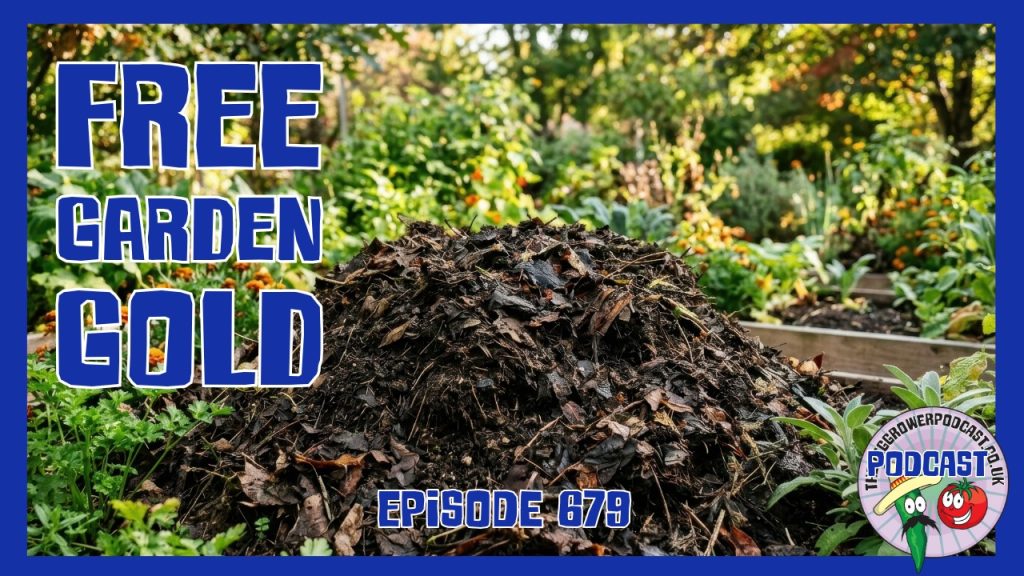
At the allotment, the leaf mould bins are beginning to fill. A simple frame made from four posts and chicken wire is enough to hold leaves while allowing the airflow that supports slow fungal decomposition.
Leaves gathered with permission from gardens and recreation grounds can become a dark, crumbly soil improver over one or two years. Woodland leaves are best left in place, where they shelter wildlife and feed the woodland ecosystem.
Although the heap shrinks considerably, the finished leaf mould is valuable. Used as a mulch, it adds organic matter, protects the soil surface and helps the ground retain moisture. It is also a welcome alternative when bought-in compost is expensive.
Store Wood Ash Safely
Clean ash from untreated wood can be useful in the garden when used sparingly. It contains potassium and may benefit suitable flowering and fruiting crops. Do not use ash from coal, painted or treated timber, or manufactured fire logs.
Because ash can hide hot embers, transfer it to a lidded metal container on a non-combustible surface and leave it until completely cold. Keep stored ash dry, and avoid applying it around acid-loving plants.
Save Compost with Plug Trays
Pricking out seedlings is a regular job in the kitchen garden. Starting seeds in plug trays can reduce the amount of compost used while giving each seedling its own root space. It also lets the grower provide reliable germination conditions before young plants move outside.
Plant Spring Flowers for Pollinators
Daffodils and tulips are not edible crops, but early flowers can help pollinators. New bulbs create a strong display in pots, while previous years’ bulbs can be moved into grass, where they may naturalise and multiply.
Six More Ways to Cut Growing Costs
- Save fully mature seed from healthy, open-pollinated plants.
- Reuse clean old net curtains as supported crop covers, taking care not to trap wildlife.
- Compost garden and suitable kitchen waste.
- Clean, sharpen and oil tools to extend their working life.
- Collect rainwater where permitted and mulch to reduce water loss.
- Check existing supplies and swap surplus seed or plants before buying more.
This Week’s Harvest and Sowings
At the allotment, the harvest included cabbage, courgettes and marrow. In the kitchen garden, tomatoes, salad leaves and herbs were still producing. Broad beans, peas and dwarf kale for baby leaves were among the week’s sowings.
The message from this week’s episode is simple: look closely at what is already available. Fallen leaves, fireplace ash, saved seed and reused materials can all play a part in a productive garden—and each small saving adds up.
If you would like to support this podcast then please consider becoming a member of our supporters club or use some of affiliate links below for items you might be buying. We might get a little commission
- Premier seeds direct for all your seed needs
- Autopot uk a revolutionary watering system for growing the best veg easily. User discount code auto10rvg for 10%off