Episode 635 – Pruning Fruit Trees, Allotment Updates & Winter Seed Planning
Podcast: Play in new window | Download
Subscribe: Apple Podcasts | RSS | More
Hello and welcome to this week’s episode of the Veg Grower Podcast! I’m Richard, and my goal is to encourage and inspire you to grow more of your own food, no matter the space you have available. I share what I’ve been up to in my own allotment and kitchen garden here in Littlehampton on the south coast of the UK. After over 30 years of growing my own food, I’m still learning something new every single day.
This week, I’ve been down on the allotment, getting stuck into some winter pruning, tending to my tools, and having a wander around the kitchen garden. Here’s what’s been happening.
Winter Pruning
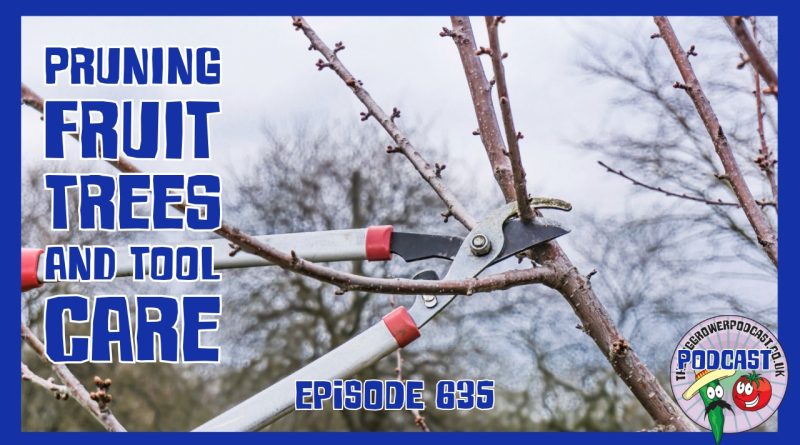
It’s that time of year to prune trees and bushes. I’ve been focusing on my apple and pear trees, both now fully dormant, making it easier to see the branches and plan the cuts. I start with the three Ds: Dead, Diseased, and Damaged branches. Clean, sharp secateurs are vital here to prevent spreading disease. These pruned branches go straight into the compost—yes, even the diseased ones, where they’ll gradually break down over a few years.
Next, I look for branches that cross or rub together and consider the overall shape and ventilation of the tree. Light and airflow are crucial for healthy growth, fruit production, and reducing fungal problems.
One of my apple trees has been a bit of a challenge—it has a tendency to list over, despite staking. This week I hammered in a longer stake and tied the tree upright, then added straw mulch to protect the roots over winter. Mulching has worked really well this year, and I’m keen to continue using it wherever I can.
Allotment Update
Despite the cold weather, there’s still plenty of life on the allotment. Some tender plants have succumbed to frost, but my brassicas and green manures are holding strong. The garlic is emerging nicely too, so I’m feeling optimistic about Christmas dinner straight from the garden!
The council has been improving the roads and paths up to our allotment. The main track is still closed to vehicles, but it’s looking much better than before. It’s exciting to see this progress, although some neighbours have been trying to improve traction with old plant matter—trust me, it doesn’t really work!
After my allotment visit, I brought my tools home for a proper service.
Tool Care
Taking care of your garden tools is one of my passions. I give all my hand tools a thorough clean, sharpening, and treatment each year. Rust is removed, handles are sanded and treated with linseed oil, and metal parts are sharpened. I also use a bucket of sand mixed with used kitchen oil to store tools—it cleans, abrades, and coats them in one go. This simple routine keeps tools in great condition and ready to last for years.
Chef Scott’s Recipe of the Week
This week, Chef Scott has been cooking Carrot and Parsnip Spiced Fritters. A brilliant way to use up stored root vegetables, these fritters are lightly spiced, crisp on the outside, and soft in the middle. Serve them with yoghurt or a poached egg—they’re perfect as a light lunch, side dish, or garden snack.
Ingredients:
- 2 medium carrots, grated
- 2 medium parsnips, grated
- 1 small onion, finely chopped
- 2 crushed garlic cloves
- 1 tsp ground cumin
- ½ tsp smoked paprika
- ½ tsp ground coriander
- 2 eggs
- 4 tbsp plain flour
- Salt and pepper
- Oil for frying
- Chopped parsley or coriander to garnish
Method:
- Squeeze out excess moisture from the grated carrots and parsnips.
- Mix with onion, garlic, spices, eggs, flour, salt, and pepper. Adjust flour if too wet.
- Heat a splash of oil in a pan, spoon in mixture, flatten slightly, and fry 3–4 minutes per side until golden.
- Drain on kitchen paper and garnish.
Feel free to swap spices—curry powder, garam masala, chilli flakes, or even grated apple can give a different flavour twist.
Seed Planning
Winter is also the perfect time to go through your seed collection. I store my seeds in wooden boxes inside an old fridge in the shed, which keeps them at a constant temperature and safe from vermin. Going through your seeds allows you to:
- Check dates and quality
- Make a list of what you have and what you need
- Plan your sowing schedule for the next year
I even used AI to create a weekly seed sowing plan for 2025, which worked surprisingly well—particularly for crops like dwarf tomatoes sown in January! I’ll be doing the same for 2026. My tip: make a seed plan for next year and match it with what you already have. It saves time and ensures nothing gets forgotten.
If you would like to support this podcast then please consider becoming a member of our supporters club or use some of affiliate links below for items you might be buying. We might get a little commission
- Premier seeds direct for all your seed needs
- Autopot uk a revolutionary watering system for growing the best veg easily. User discount code auto10rvg for 10%off