Episode 644 Sowing Seeds, Sodden Soil & Is Crop Rotation Still Necessary?
Podcast: Play in new window | Download
Subscribe: Apple Podcasts | RSS | More
It’s been another wet and windy week here in Littlehampton, and once again the weather has been calling the shots. Outdoor jobs have been limited, but plenty has still been happening both indoors and on the allotment.
In this week’s episode of the Veg Grower Podcast, I’m sharing an update from the kitchen garden, how seed sowing and potting on are progressing, a slightly frustrating allotment visit, and answering a listener’s question about crop rotation.
In the kitchen garden
The constant rain has been a bit of a worry this week, particularly for the chickens. Even with a covered run, the clay soil is holding a lot of moisture and becoming boggy underfoot. For now, it’s a case of managing things as best as possible and planning improvements for drier conditions later in the year.
Elsewhere in the garden, everything is ticking along nicely. Garlic, chard and purple sprouting broccoli are all growing well, which is always reassuring at this time of year.
With outdoor gardening limited, most of my focus has been indoors. February is a great time to get ahead with seed sowing if you’ve got a warm windowsill or propagator. Aubergines, celery, celeriac, leeks, chillies, cauliflowers and cabbages have all been sown, setting things up nicely for the months ahead.
Seed compost, mixes and potting on
I keep seed sowing simple. A fine seed compost mixed with a small amount of perlite provides good drainage without overfeeding young seedlings.
Once plants are established, they’re potted on from plug trays into individual pots using multi-purpose compost, again with added perlite and just a light sprinkle of a general feed. Starting plants in plug trays has made potting on quicker, tidier, and reduced waste, which has been a real bonus.
Everything is still growing indoors under heat and grow lights for now, but the aim is steady, strong growth rather than rushing plants too early.
Harvests and preserving produce
Despite it still being winter, there’s plenty to harvest. Kale, chard, Brussels sprouts and purple sprouting broccoli are all being picked regularly, along with a good amount of parsley.
Some of the parsley has been dried using a small dehydrator set to around 35°C. It’s a simple way to preserve herbs and extend the usefulness of what’s grown in the garden. I mention the dehydrator I use in the podcast and this ca be found here.
Recipe of the week: Creamy Leek & Mustard Pasta
This week’s recipe uses one of those reliable winter staples – leeks. They quietly earn their keep all winter and work brilliantly in simple, comforting meals.
The recipe is a creamy leek and wholegrain mustard pasta that’s quick to cook, flexible, and perfect for using home-grown leeks.
You can find the full recipe here: Creamy Leek & Mustard Pasta
Down on the allotment
A brief dry spell made it possible to visit the allotment, and the raised beds and no-dig approach are once again proving their worth. Despite all the rain, the soil remains workable and free-draining.
Most of the time this week has been spent dealing with a problem area near neighbouring plots that have been left unattended. Brambles and weeds continue to creep in, along with dumped pots and debris. Cutting things back while everything is dormant helps keep the situation manageable.
There are also clear signs that spring isn’t too far away. Buds are appearing on the thornless blackberry, garlic and onions are looking strong, and recent work on the potato beds is holding up well.
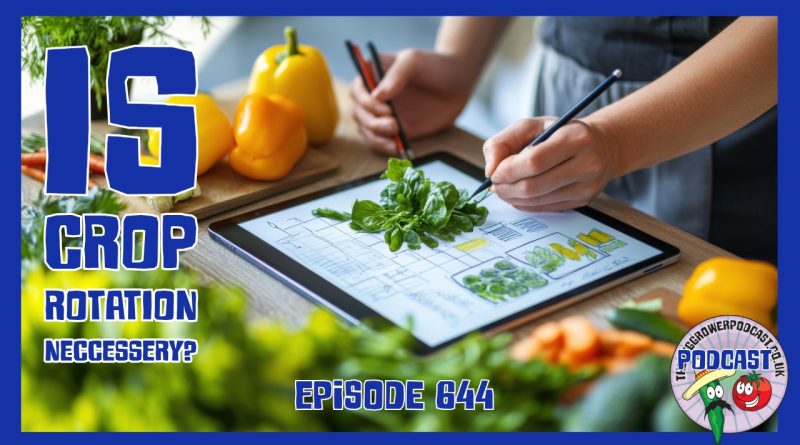
Listener question: Is crop rotation still necessary?
This week’s listener question comes from Lynn, who asked whether crop rotation is really necessary on an organic, no-dig plot, especially in a small space with perennial crops.
Traditional crop rotation helps reduce pest and disease build-up and manage soil fertility, but in smaller gardens and allotments it isn’t always practical or essential. Avoiding planting the same crop in exactly the same spot year after year, mixing plantings, and using companion plants can often achieve similar results.
Perennial crops, including perennial brassicas, are perfectly fine, as long as we stay mindful of diseases such as clubroot and respond sensibly if problems arise.
Final thoughts
The weather may be frustrating, but there’s still plenty that can be done at this time of year. Seed sowing, potting on, harvesting, and planning all add up, and before long the growing season will really get going.
Thanks for listening, and if you’ve got a question you’d like answered on the podcast, do get in touch – I always enjoy hearing from you.